A CFO hears the word "optimization" from three different consulting firms in the same month, and each one seems to mean something slightly different by it. One pitches it as a performance tune-up. Another frames it as a reporting overhaul. A third uses it almost interchangeably with "health check." None of this is dishonest exactly — it's just that "optimization" has become a catch-all term broad enough to mean whatever the person saying it wants it to mean.
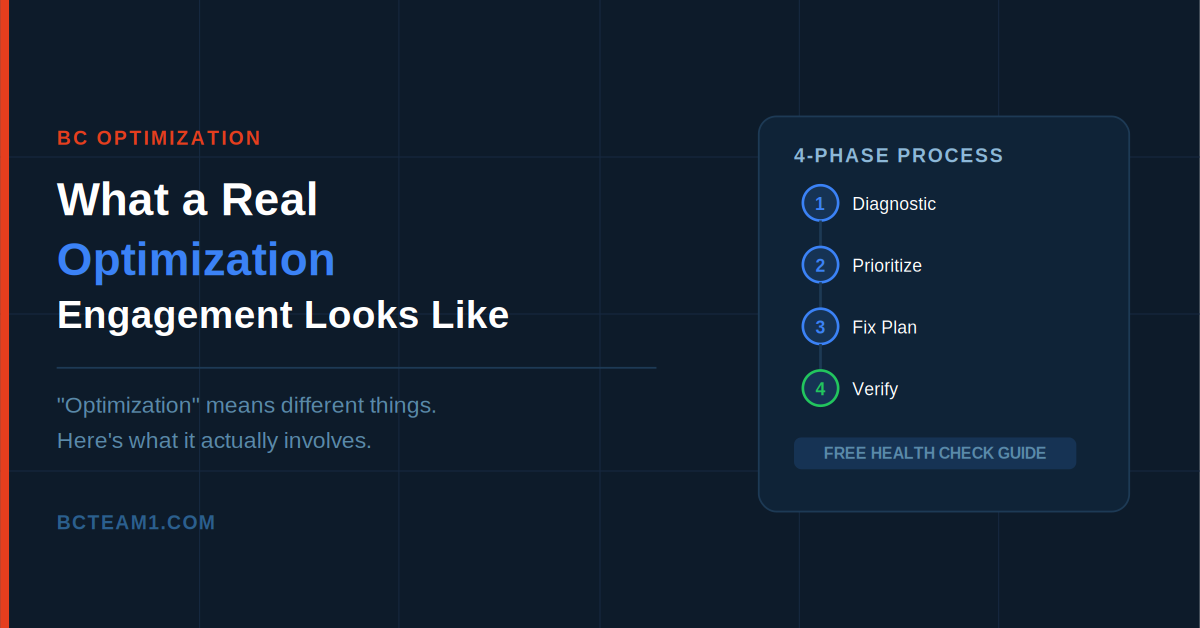
That vagueness is a real problem for a buyer trying to decide whether they actually need this kind of engagement. Here's what a genuine, well-structured Business Central optimization engagement actually looks like, broken into its real, distinct phases.
Phase 1: Diagnostic, Not Guesswork
A real optimization engagement starts by actually measuring what's happening in the environment, not by asking a generic intake questionnaire and guessing from the answers. This means connecting or reviewing Application Insights telemetry if it isn't already active, running Page Inspection on the specific screens users complain about, and pulling actual usage data — which reports run slowly, which pages take longest to load, which transactions generate the most support tickets.
This phase should produce a specific, evidence-based list of findings — not a generic "your system could be faster" summary. If an engagement skips straight to recommendations without ever showing you what it actually measured, that's a sign the "diagnostic" was closer to a sales pitch than a genuine assessment.
Phase 2: Prioritization by Actual Business Impact
Not every finding matters equally. A dimension setup issue that adds two seconds to a rarely-used report is a very different priority than a Chart of Accounts problem adding three days to every month-end close. A real optimization engagement ranks findings by actual cost to the business — hours lost, risk exposure, close delays — not by how technically interesting the fix is.
This is also where a good engagement tells you honestly which issues are quick wins and which require more significant rework, rather than presenting everything as equally urgent to create pressure toward a bigger, more expensive scope.
Phase 3: A Fix Plan You Can Actually Evaluate
The output of this phase should be specific enough that you could, in theory, hand it to a different team and have them execute it — not a vague statement like "we'll clean up your dimensions." A real plan names the specific dimensions being consolidated, the specific G/L accounts being reviewed, the specific reports being rebuilt, and gives you a genuine before-and-after picture of what changes.
Phase 4: Implementation With Verification, Not Just Changes
Making the changes is only half the work. A real optimization engagement verifies each fix against the original diagnostic data — confirming the slow report actually got faster, the close actually got shorter, the reconciliation actually got cleaner — rather than simply asserting the work is done and moving on. Without this verification step, there's no way to know whether the engagement delivered real value or just activity.
What This Is Not
An optimization engagement is not a full re-implementation, and it's not a generic "let's see what we find" open-ended retainer. It's a bounded, evidence-driven process with a clear start and end point, targeting specific, measurable problems in an environment that's fundamentally working but not performing the way it should.
How to Tell If You Actually Need One
A few honest questions worth asking internally: does month-end close take longer than it reasonably should, with nobody quite sure why? Do specific reports or pages consistently frustrate users without a clear technical explanation? Has your Chart of Accounts, Dimensions, or permission structure gone untouched since your original implementation, even as the business has changed significantly since then? If two or more of these are true, a genuine diagnostic — not a sales conversation — is worth having.