Your accountant needs specific numbers in a specific format, and pulling them together at the last minute is harder than it should be if the right reports were never actually set up.
Every record you've ever posted is still sitting in your live database, being scanned by every report you run. At some point, that volume starts costing you something real.
Nobody currently at your company remembers why you have 11 dimensions. Here's why dimension decisions accumulate silently, and how to actually clean them up without breaking historical reporting.
You didn't build this problem, but you're the one holding it now. The instinct to fix everything immediately is understandable — and it's usually the wrong first move.
The pricing model your implementation partner proposes changes more than the invoice structure — it changes who absorbs risk when scope inevitably shifts.
A currency exchange rate that's a day stale doesn't look wrong on any single invoice. It looks wrong three months later, as an unexplained variance nobody can trace back to its source.
Consolidation reporting is only half the intercompany picture. Here's what has to be configured correctly for the day-to-day transactions between related entities to actually flow cleanly.
Nothing is technically down. Nobody's filed an urgent ticket. And your environment might still be quietly costing you hours every week. Here are five signs worth checking.
A sales order for a customer already 90 days past due still ships, because nobody in the process was actually blocked by a credit limit. Here's how Business Central's credit controls actually work when configured properly.
You don't need a new ERP project to fix a broken collections process. RAP runs alongside your existing Business Central environment and starts working on day one.
"Four months" usually assumes clean data, no major customizations, and a team available exactly when needed. Here's a realistic breakdown, phase by phase.
A struggling implementation and a genuinely doomed one look similar from the outside. The distinction matters enormously, because one needs a course correction and the other needs a different decision entirely.
Every implementation proposal shows a clean, linear timeline. Real ones don't run that way, and knowing where they actually slip is worth more than the Gantt chart itself.
Closing the fiscal year in Business Central is a single, deliberate action with no simple undo. Here's the checklist worth working through before anyone touches that button.
Premium licensing isn't priced per manufacturing user — it applies to every single full user in the company, whether they touch the shop floor or not. That detail changes the real cost math more than most companies expect.
Login counts tell IT nothing about whether Business Central is actually being used correctly. Here's what's worth tracking instead, and how to get that data out of a platform that doesn't surface it by default.
Most G/L budgets in Business Central get built once during implementation, imported from last year's Excel version, and never touched again until someone asks why the budget-to-actual report doesn't mean anything.
The native Shopify connector is genuinely capable and free. It also doesn't handle lot tracking, serial numbers, or multi-channel selling beyond Shopify — and finding that out mid-project is more expensive than knowing upfront.
The same vendor invoice gets paid twice because it entered the system through two different channels with two different reference numbers. Here's why duplicate payments happen even in a system that technically tracks every invoice.
Microsoft backs up your entire Business Central environment automatically. What it can't do is restore just the one customer record someone accidentally deleted this morning without restoring everything else too.
A product recall is the worst possible moment to discover your lot tracking has gaps. Here's what proper item tracking setup actually requires, and why it's usually configured just enough to look complete without actually being reliable.
A purchase order is the easy part. What happens between issuing it and paying the resulting invoice is where most procurement teams quietly lose control — and where Business Central actually has more built-in structure than most companies use.
Business Central ships with genuine embedded Power BI reporting. Most companies never get past the default tiles, and few understand where native reporting actually stops and real Power BI development begins.
A single Canadian sales invoice can legitimately show up to four separate tax jurisdictions on one document. Here's how the GST/HST setup actually works, and where it typically breaks.
Turning on Directed Put-away and Pick is a one-way door on any location with posted transactions. Here's how to tell which warehouse complexity level actually fits your operation before you flip that switch.
Business Central has no built-in check that stops one person from creating a vendor and approving their own payment to it. Here's where that gap starts.
A sales rep closes a deal, then spends twenty minutes fighting the order screen for an item that isn't in stock. Here's where that friction actually comes from.
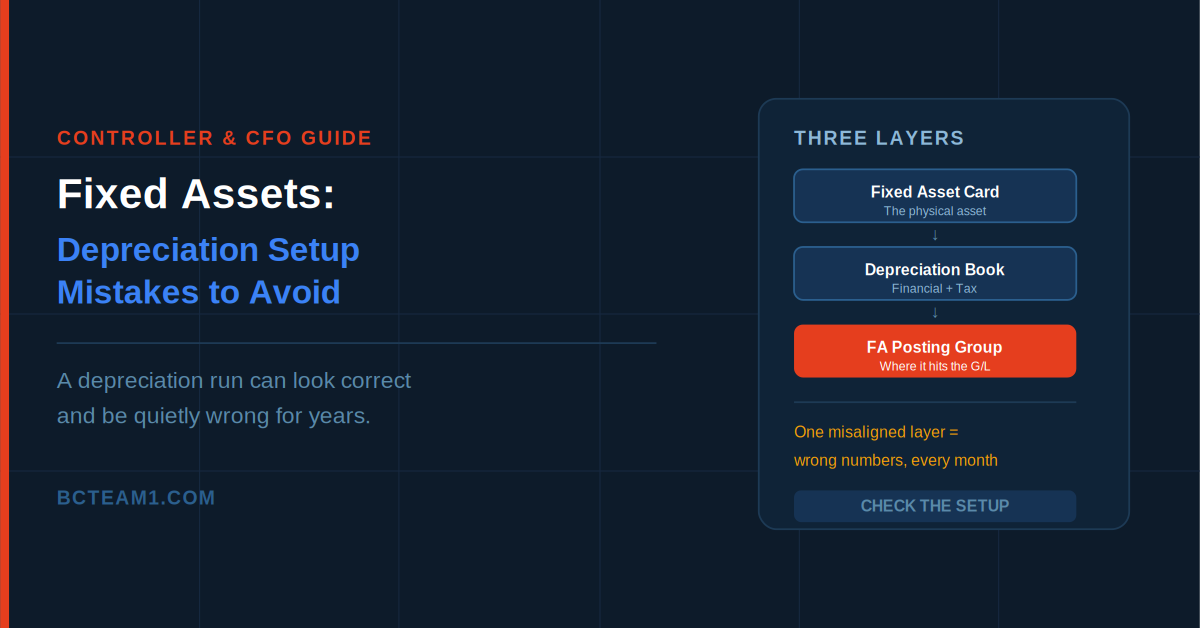
A depreciation run that looks correct in Business Central can still be quietly wrong for months, because the mistake usually happened during setup, not during the monthly batch job.
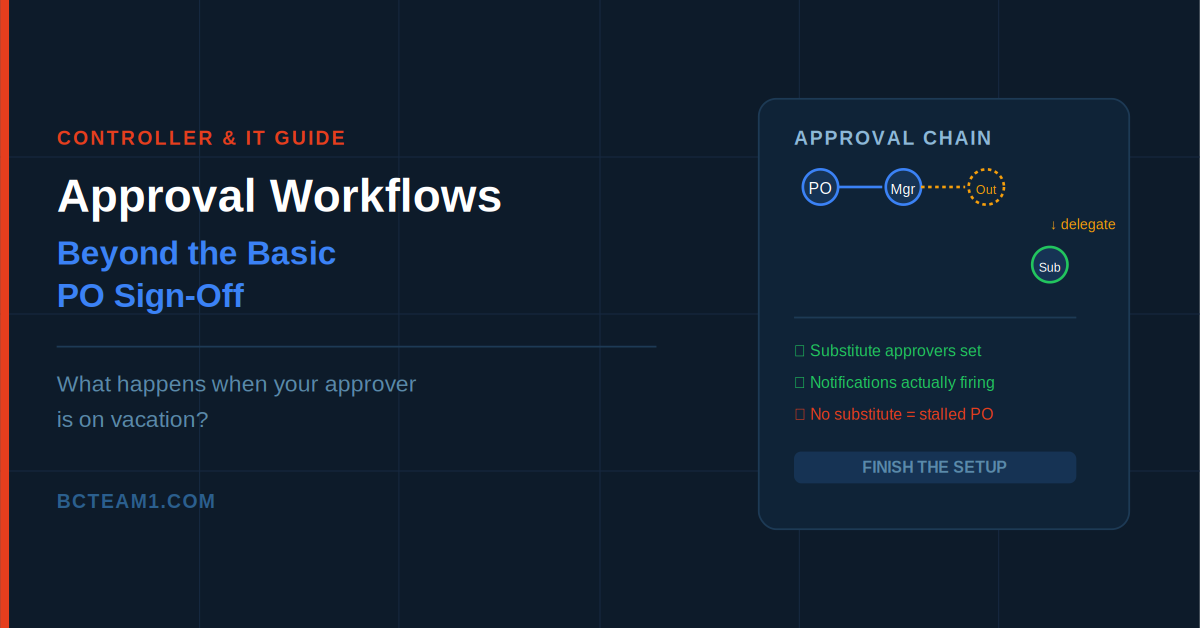
Most companies configure one basic PO approval during implementation and never touch the workflow engine again. Here's what that leaves on the table — and what happens the week your approver is on vacation.
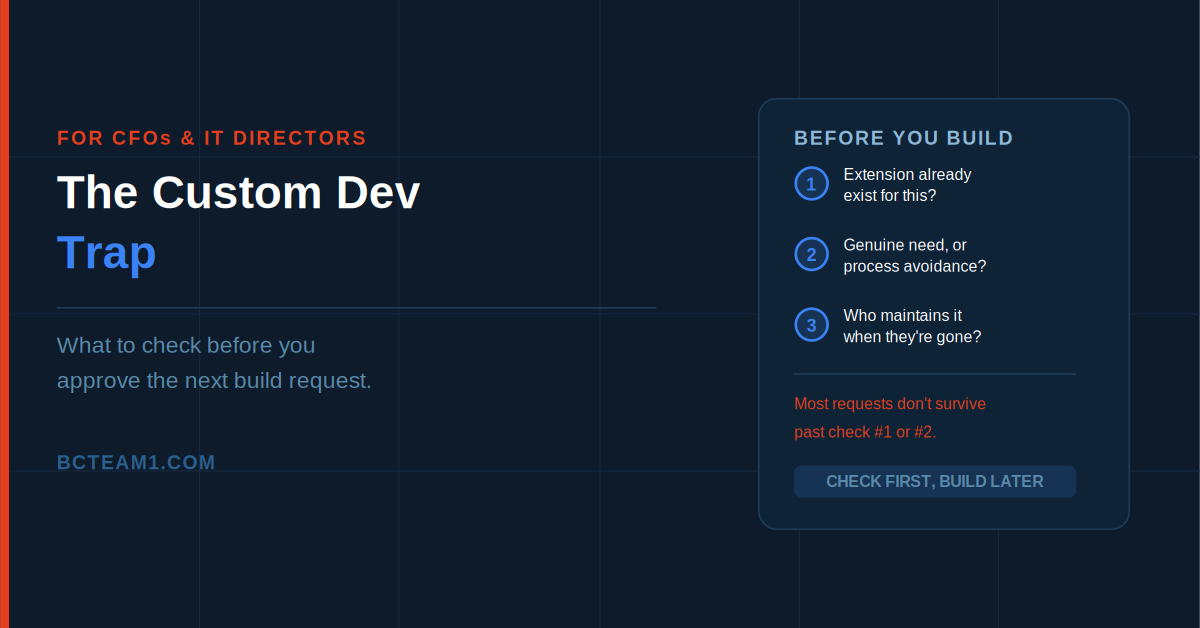
"We need the system to work the way we've always worked" is a common brief. It's also often a request to avoid changing a process that was never that efficient to begin with.
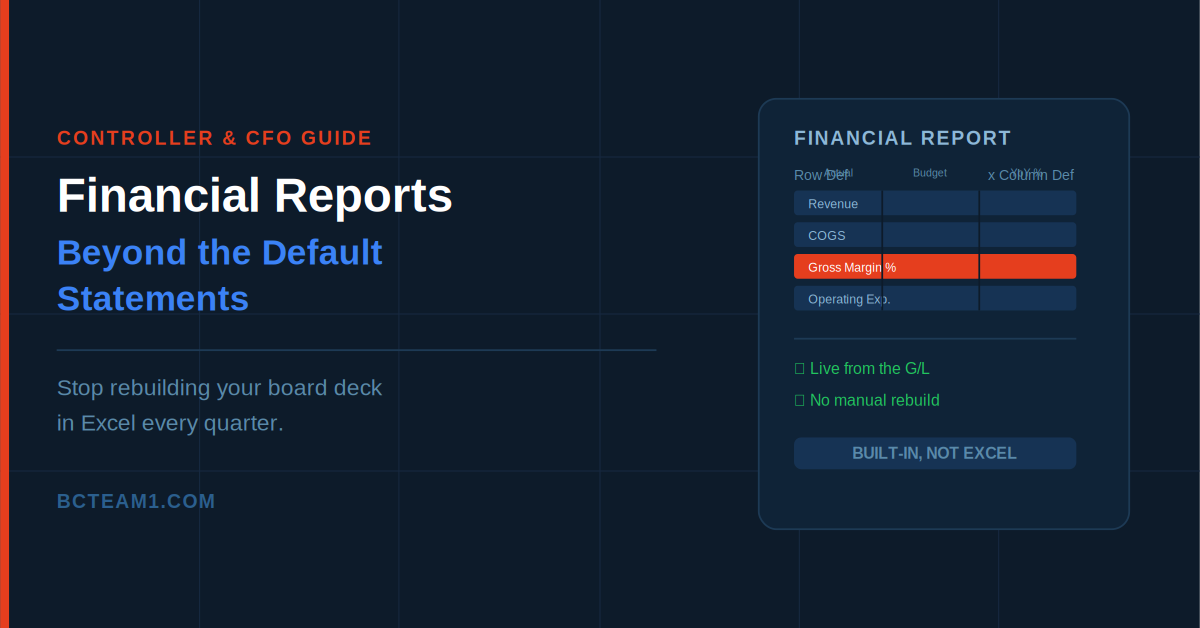
If your board deck is still built by exporting the default trial balance into Excel and reformatting it by hand, Business Central's Financial Reports engine was never actually turned on.
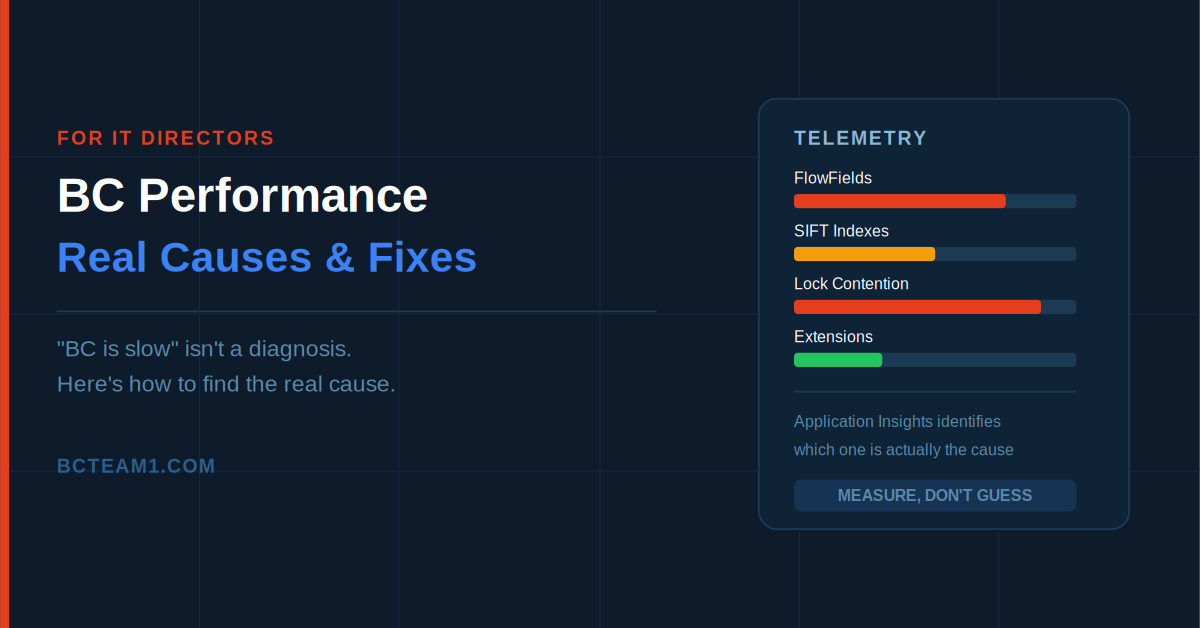
"BC is slow" isn't a diagnosis, it's a symptom. Here's how to use the actual telemetry tools Microsoft ships to find out which of four specific causes is behind it.
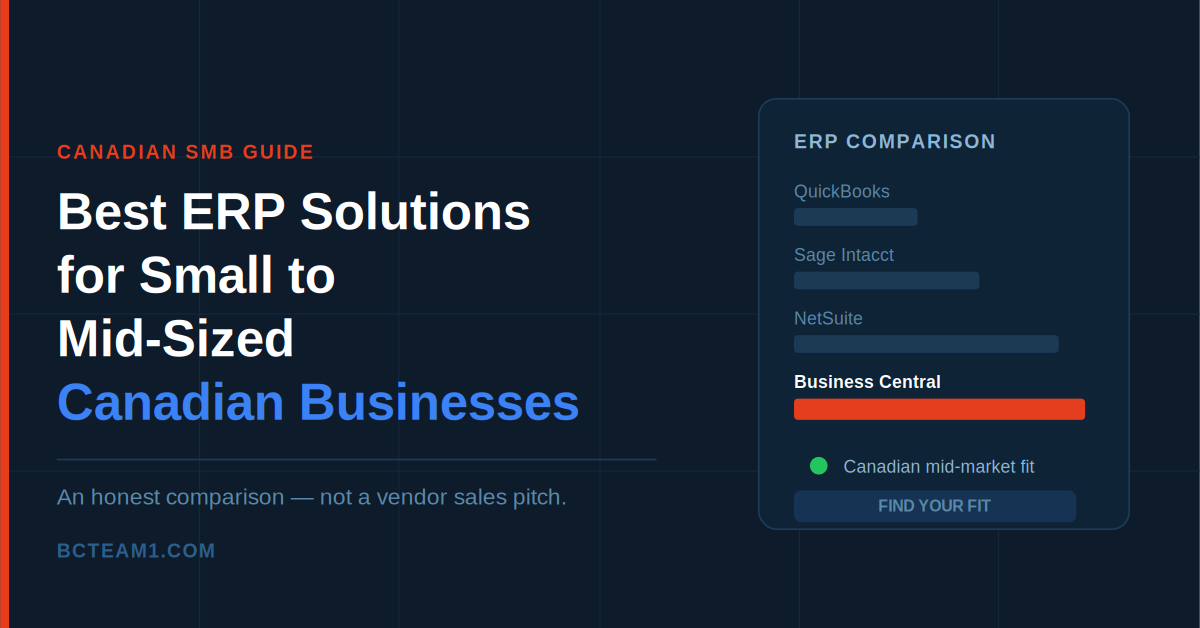
Every ERP vendor will tell you their platform is the right fit. Here's an honest breakdown of where QuickBooks, Sage, NetSuite, and Business Central actually make sense — and where they don't.
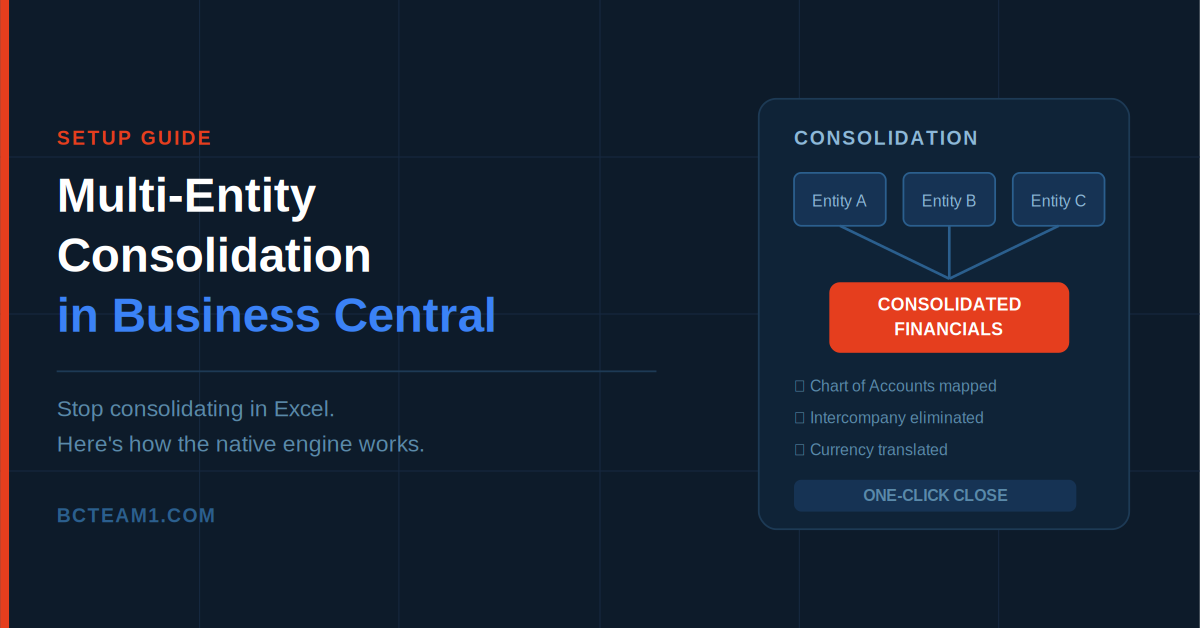
If consolidating your entities still means exporting trial balances into a spreadsheet, you're not using a limitation of Business Central — you're using a workaround for one you built yourself.
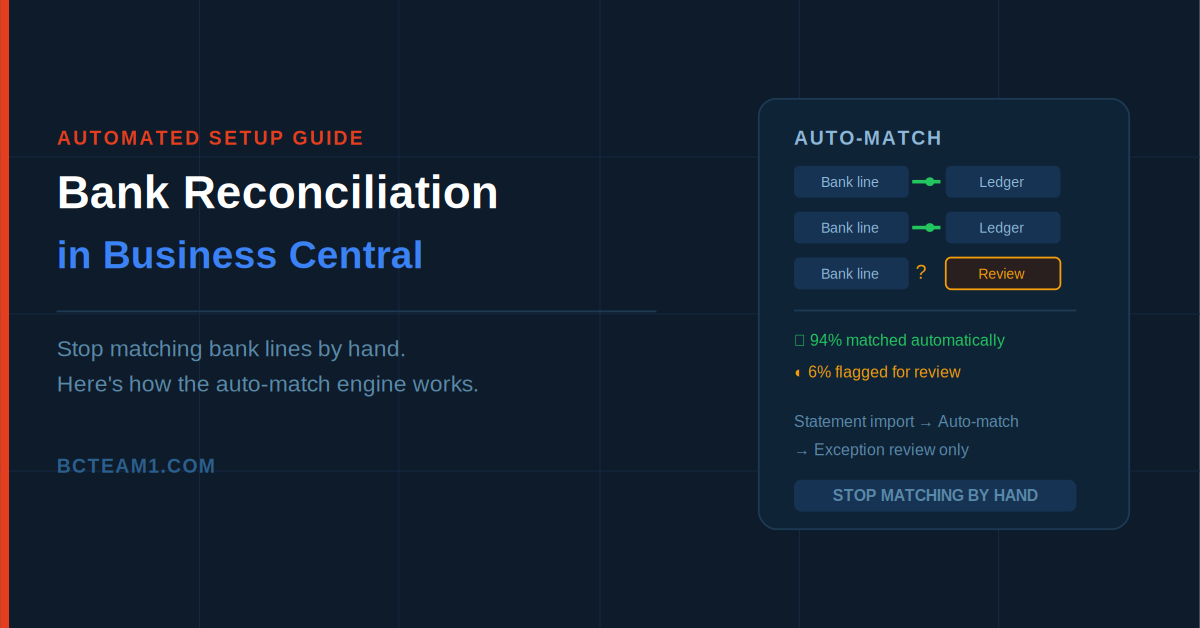
If someone on your team is still scrolling through a bank statement line by line every month, the automated tools were never configured properly. Here's how to fix that.
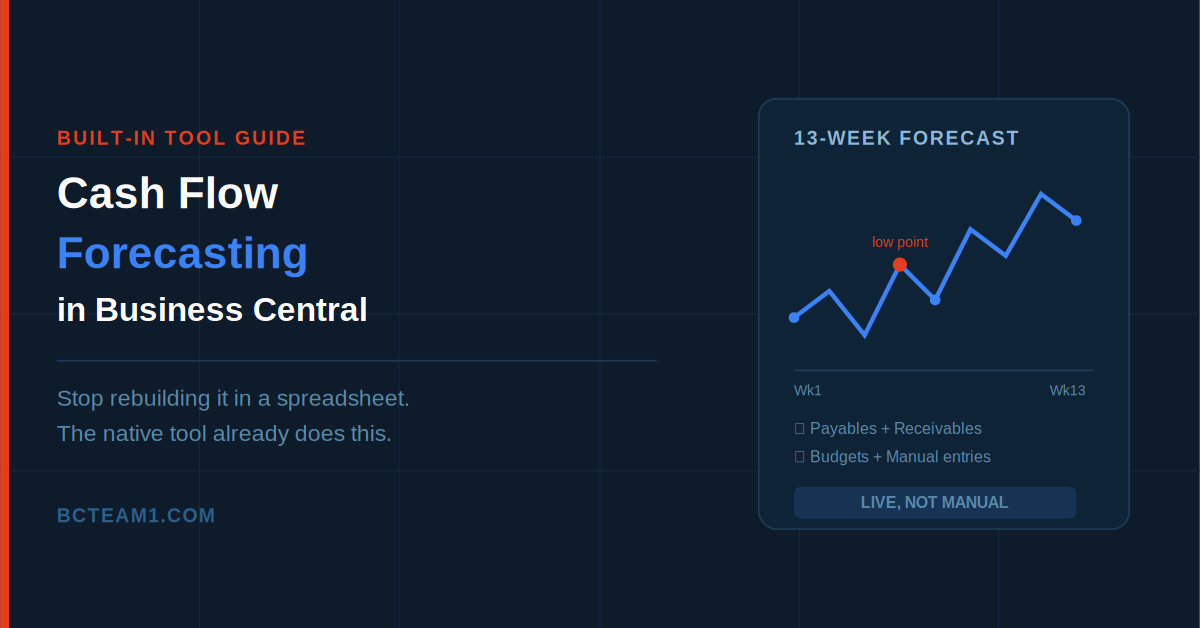
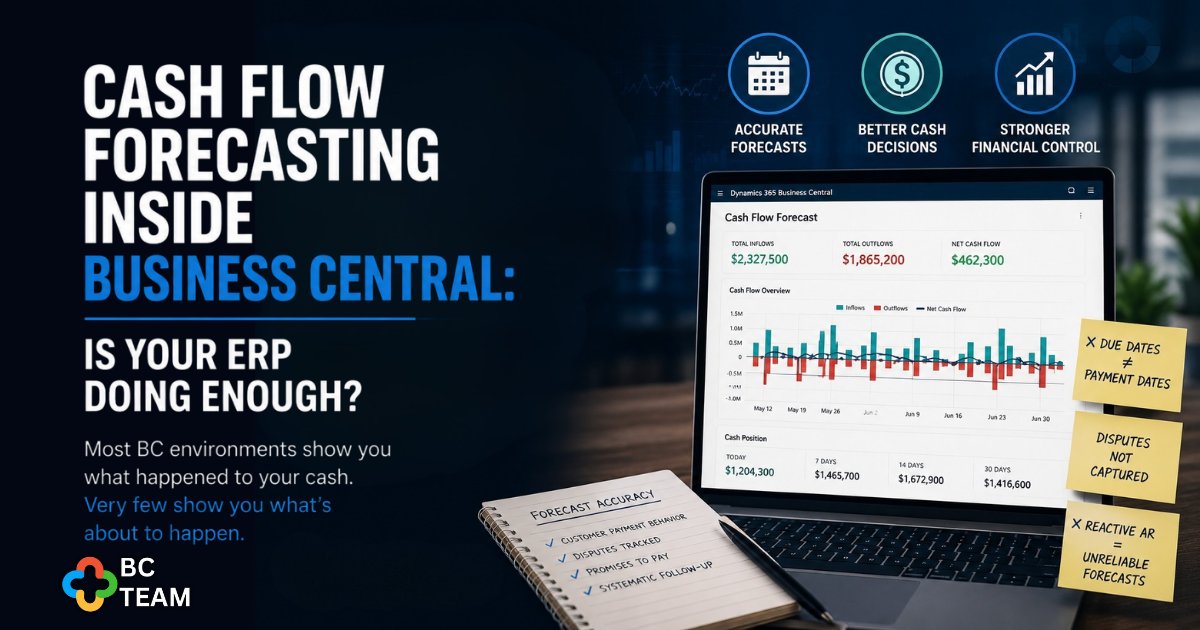
Most companies running Business Central have never opened the Cash Flow Forecast page. Here's exactly how it works, what feeds it, and how to set it up properly.
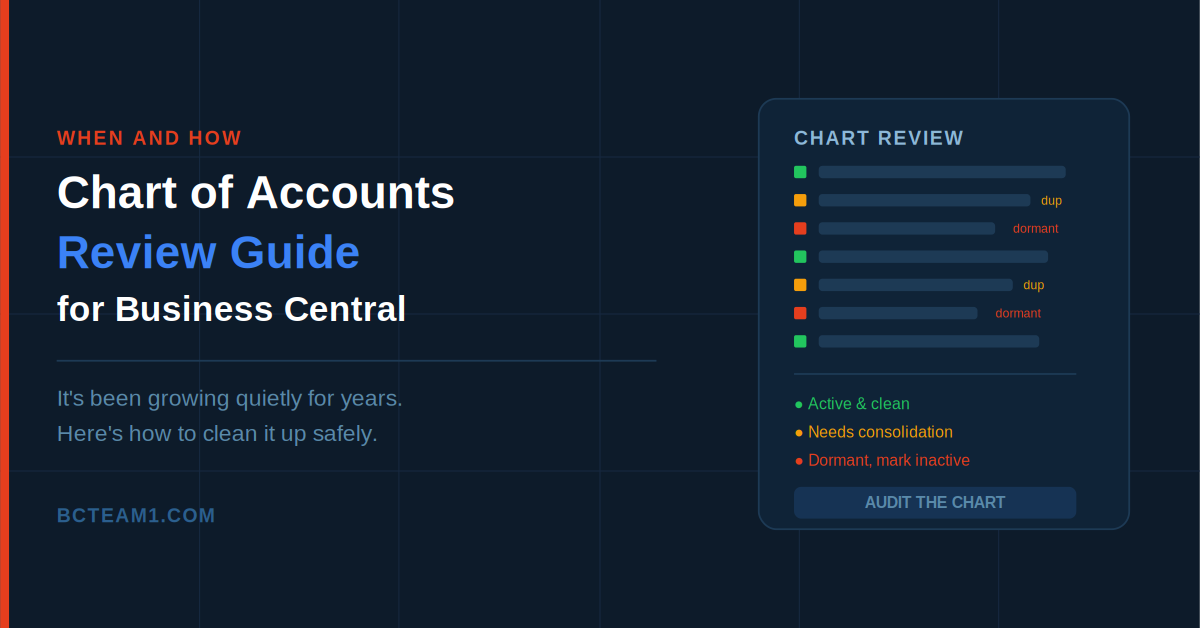
Nobody schedules a Chart of Accounts review. It just quietly needs one, usually for years, until close starts taking noticeably longer and nobody can say exactly why.
Most partner due diligence stops at certifications and references. The questions that actually predict success are about staffing and post-go-live support.
A distributor and a professional services firm are evaluating almost entirely different capabilities under the same "ERP" label. Here's what actually matters by industry.
The choice between real-time and batch integration isn't a minor technical setting — it's a business decision with real consequences. Here's the framework.
A partner whose typical client is far larger than you will structurally deprioritize your project. Three questions to find out where you'd actually rank.
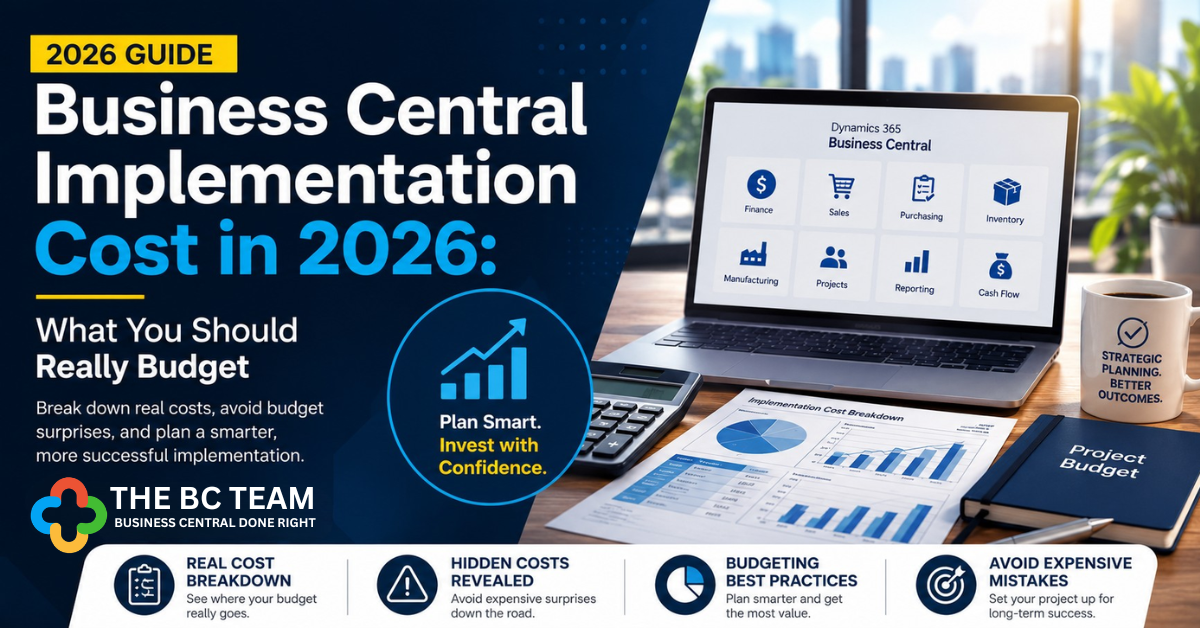
The biggest mistake companies make is assuming implementation cost equals software cost. Here's what a BC project really costs — and how to budget for it properly.
By the time an implementation is visibly struggling, the mistake was usually made months earlier during selection. Five patterns worth recognizing first.
"Can you resend the original invoice? We never received it." If that sentence makes your AR team's stomach drop, RAP was built to make it disappear from your collections process entirely.
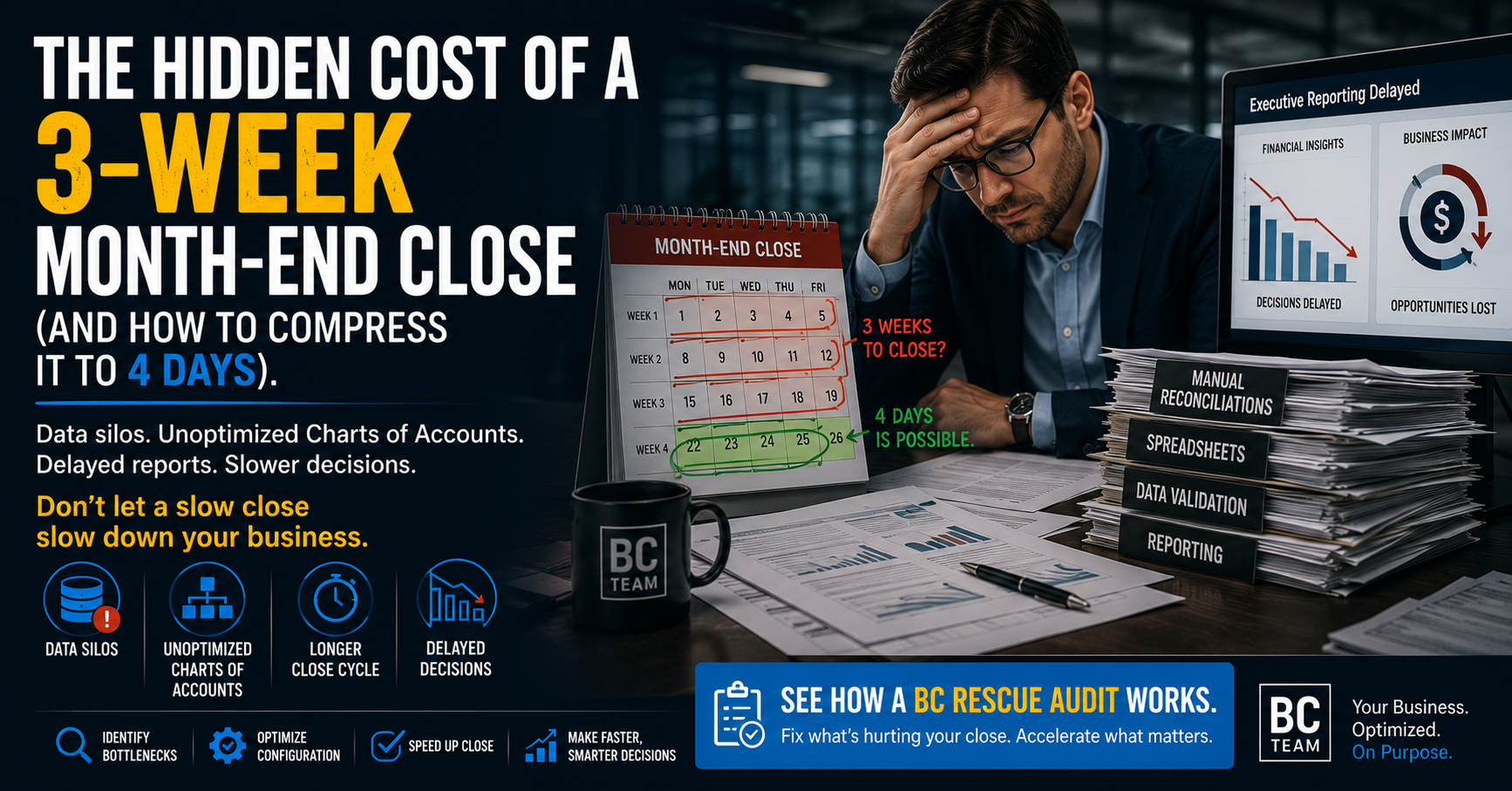
If your close still takes three weeks, your executives are making decisions on data that's already stale by the time they see it. Here's what's causing the drag — and how to fix it.
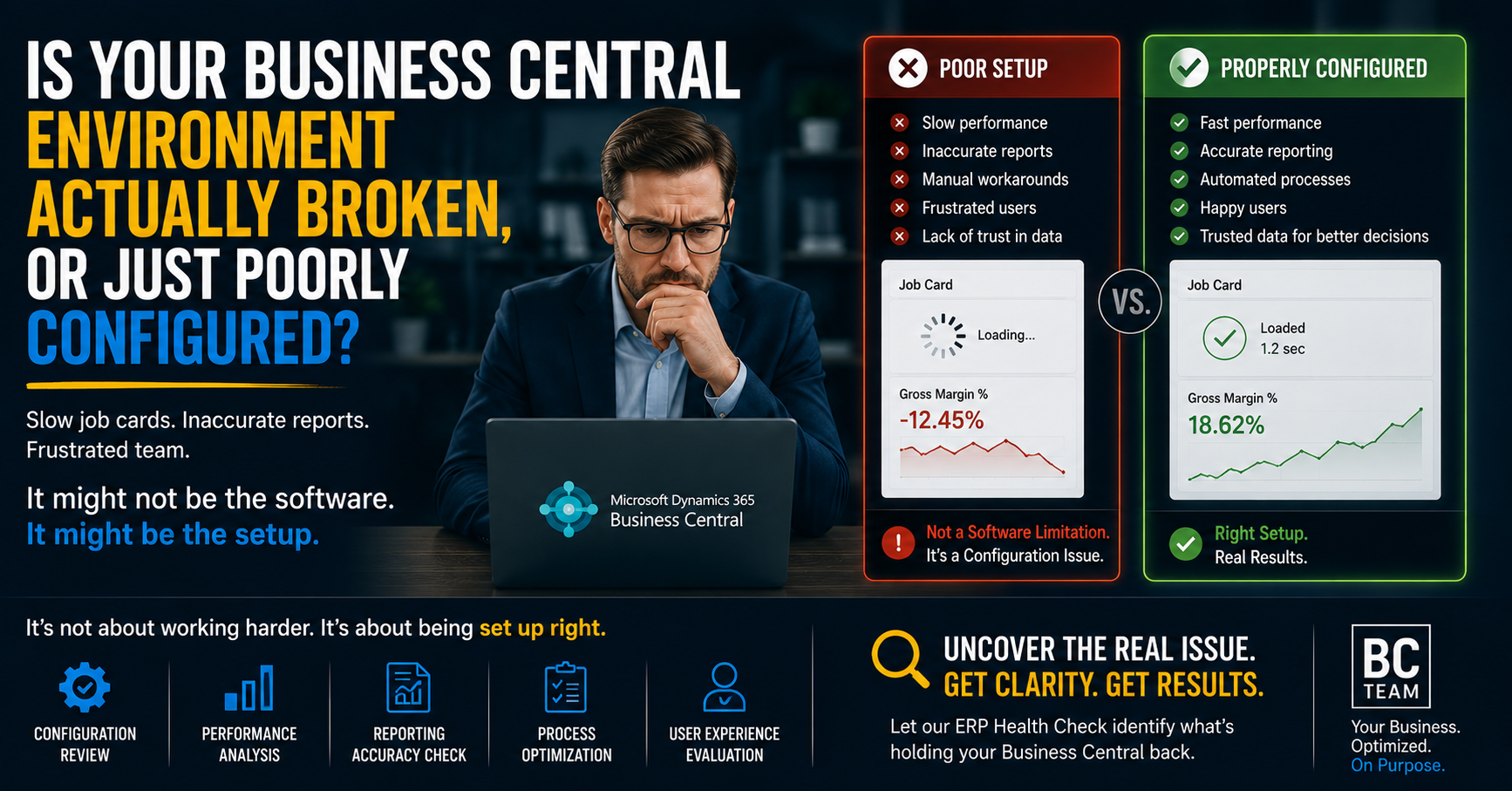
If Job Cards take forever to load and month-end feels like a hostage situation, the problem almost certainly isn't Business Central. It's how it was set up.
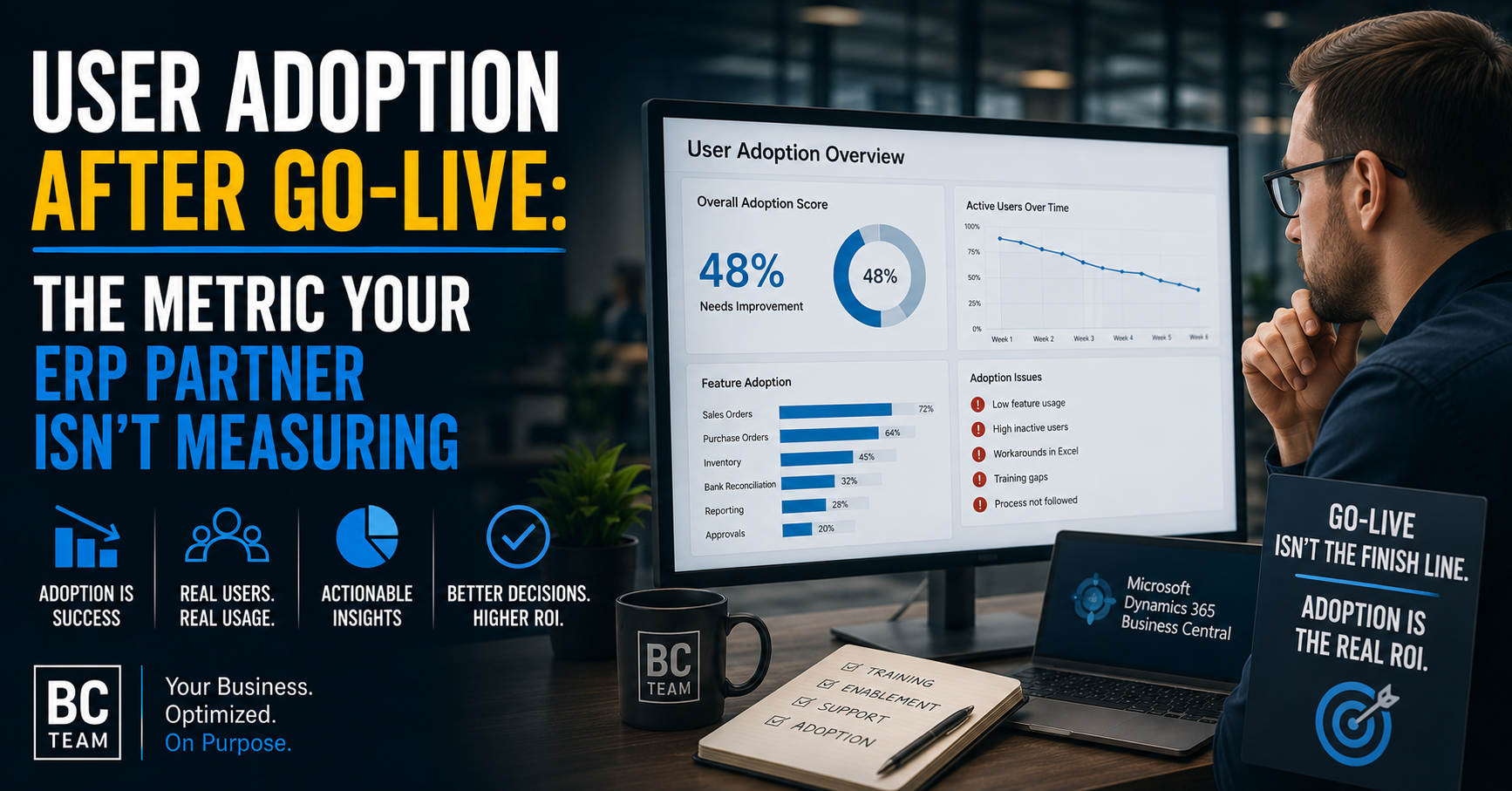
Your implementation partner will tell you the project finished on time and on budget. They won't tell you that half your team quietly went back to Excel three weeks later.
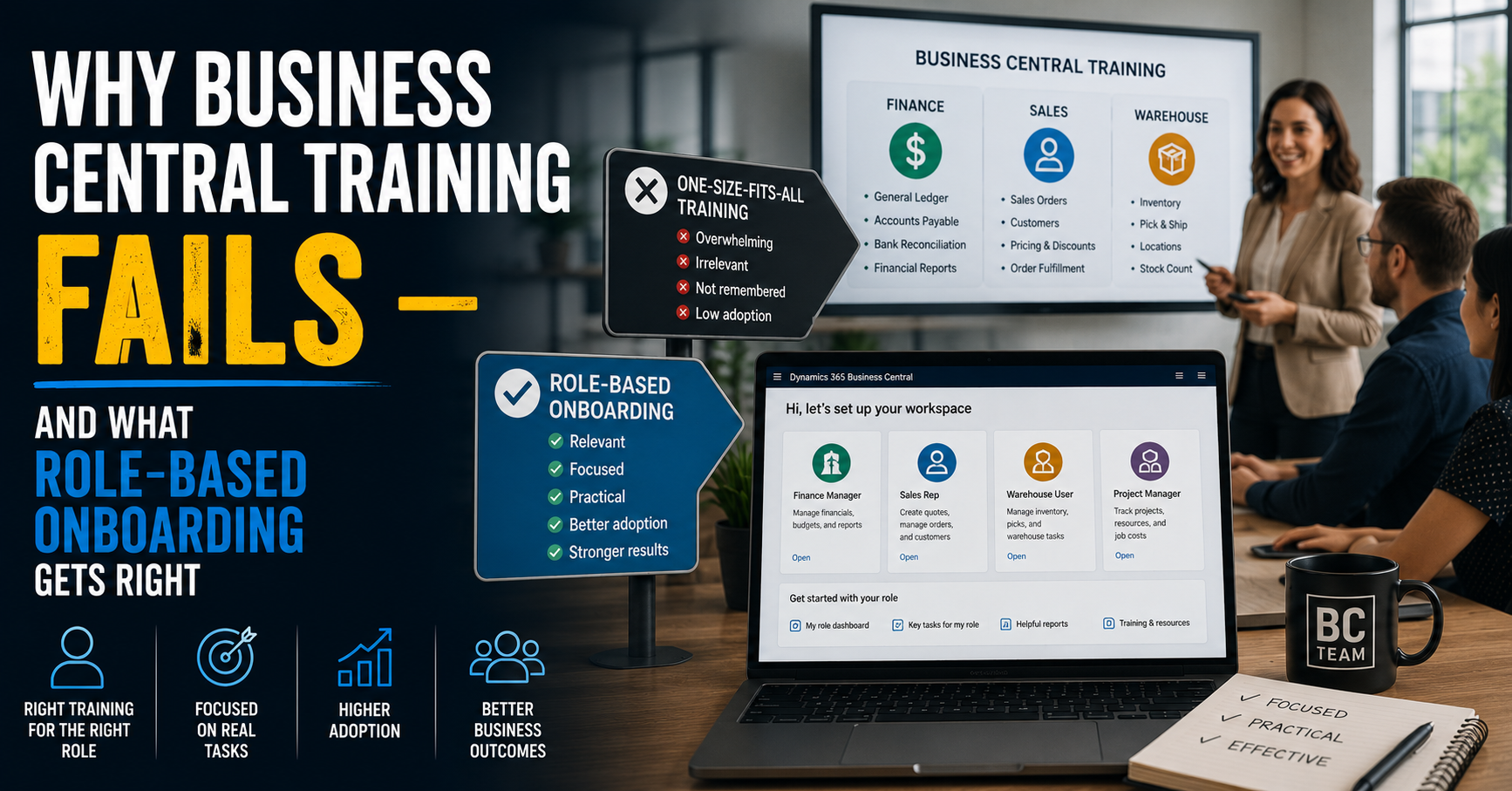
A two-hour training session for the whole company doesn't fail because people weren't paying attention. It fails because nobody in that room needed all of it. Here's why role-based onboarding actually sticks.
Most manufacturers using Business Central are running it like a glorified accounting system. Here's what changes when you actually use the manufacturing module the way it was built.
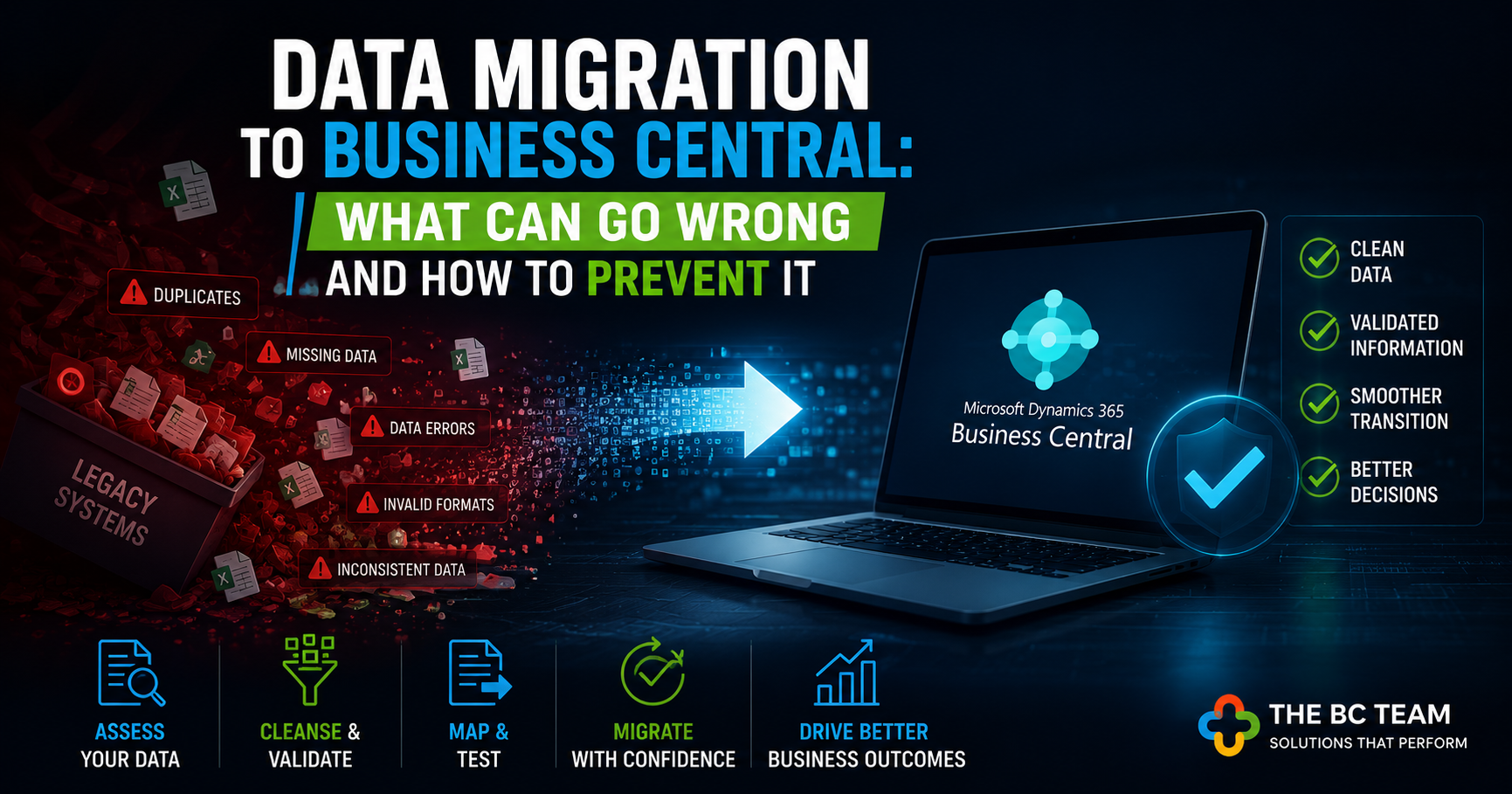
Most Business Central migrations don't fail because of the software. They fail because of the data. Here's what actually goes wrong — and how to get ahead of it.
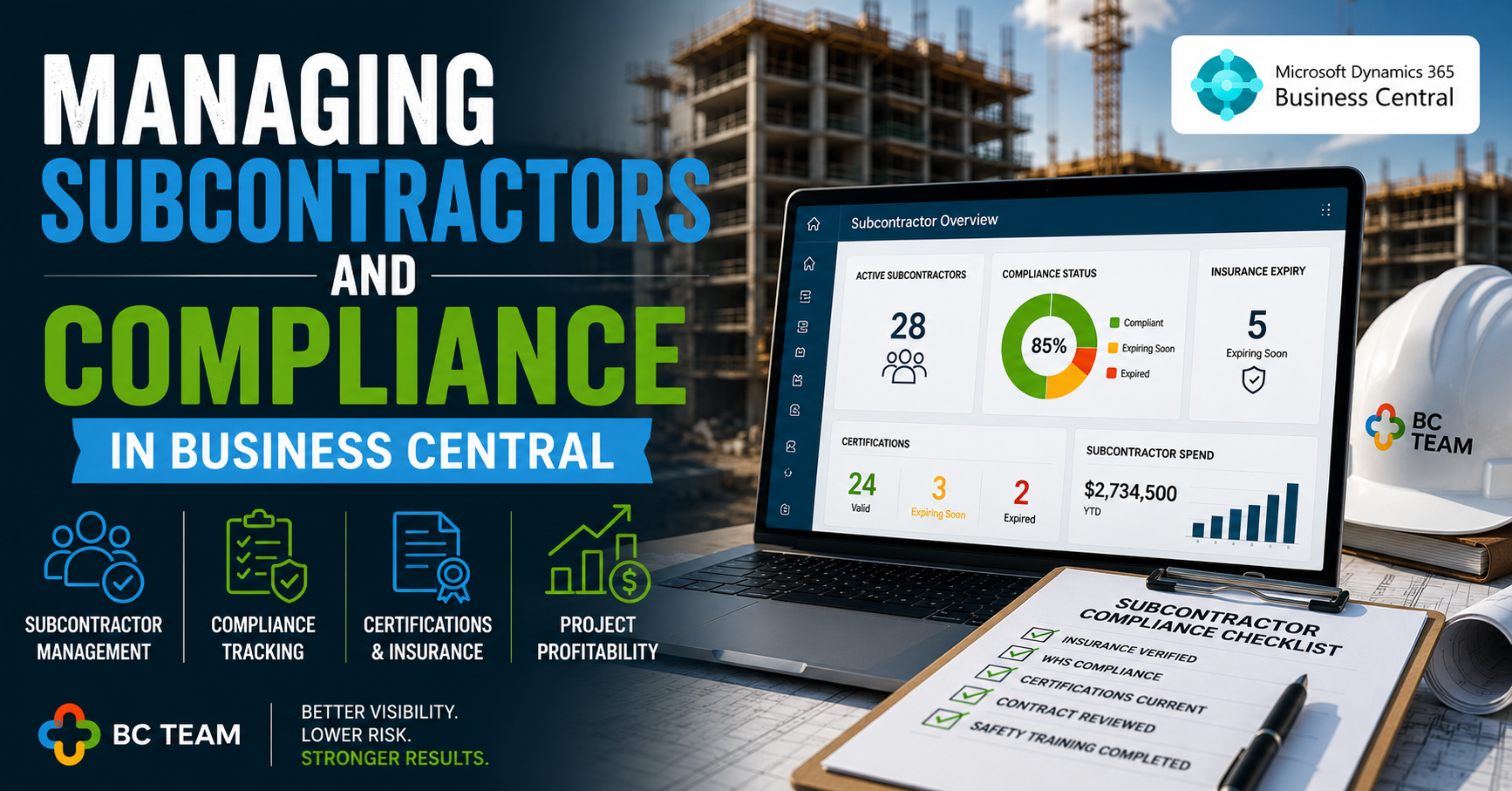
There's a contractor invoice sitting in someone's inbox right now, waiting on a certificate of insurance that expired two months ago. Here's how Business Central closes the gap.
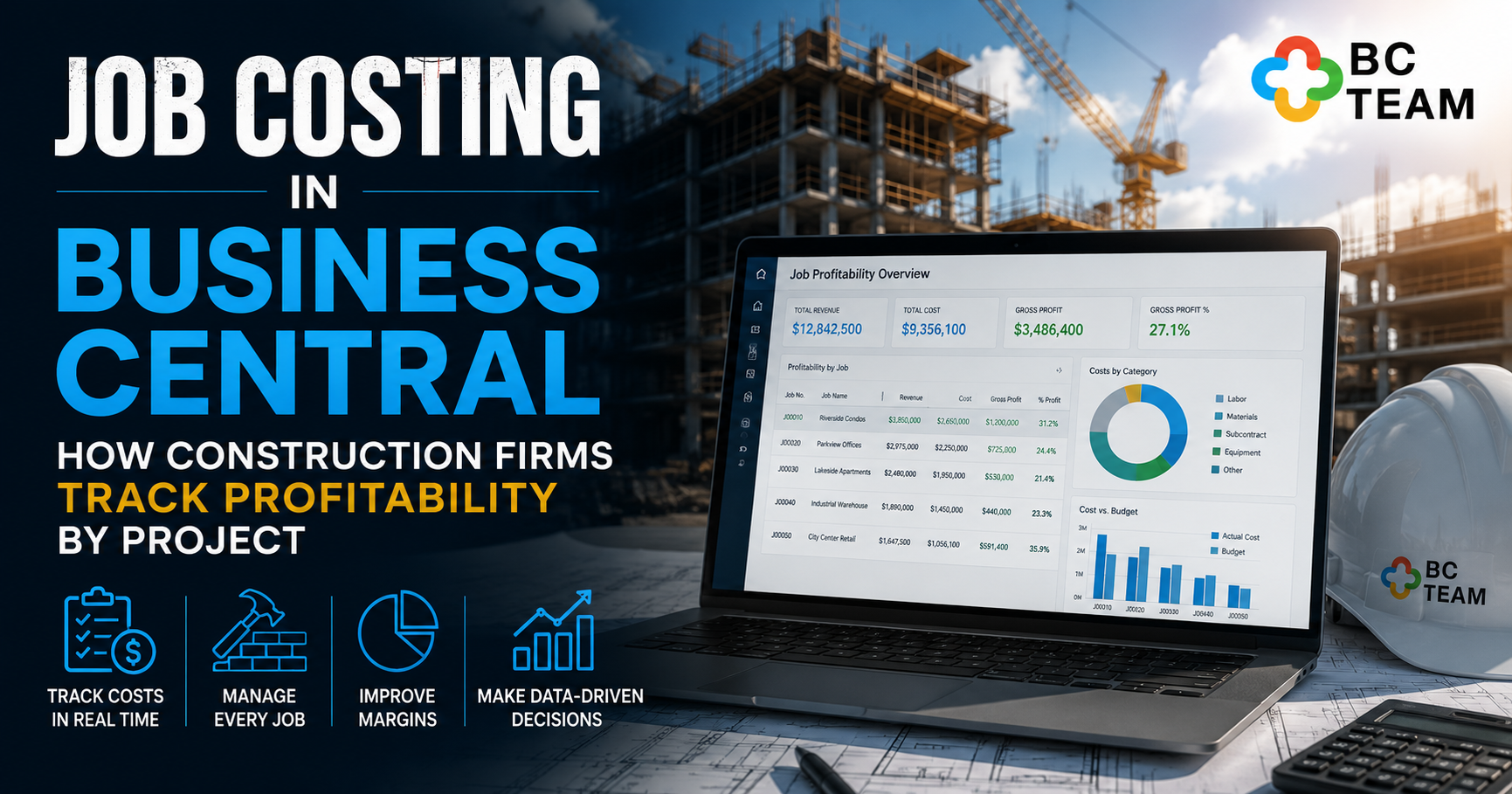
Construction profitability doesn't live in a spreadsheet. It lives in your job cards — if they're set up right. Here's how BC tracks real project costs from estimate to close.
If your cash flow forecast lives in a spreadsheet that someone updates manually every week, your ERP isn't doing its job. Here's what Business Central can do natively — and where it needs help.
Most buyers are still evaluating partners against a certification system Microsoft retired in 2022. Here's how to verify what a firm's current standing actually is.