Strategies for a Successful Microsoft Dynamics 365 Business Central Implementation
- Nov 11, 2025
- 4 min read
Implementing a new ERP system like Microsoft Dynamics 365 Business Central is a major milestone for any organization — but it doesn’t have to be overwhelming. With the right plan, your implementation can streamline processes, improve visibility, and empower your team to make smarter, faster decisions.
At The BC Team, we’ve guided hundreds of small and mid-sized businesses — especially in construction, manufacturing, and service-based industries — through successful Business Central implementations. Here’s our proven approach to help you build a strategy that sets your business up for long-term success.
Why a Strong ERP Implementation Strategy Matters
A successful Business Central implementation isn’t just about installing software — it’s about transforming how your business operates. Without a clear plan, companies risk delays, budget overruns, and poor user adoption. A well-structured implementation strategy ensures every phase aligns with your goals and delivers measurable results.
A strong strategy helps you:
✅ Define clear business objectives and success metrics
✅ Allocate the right resources and expertise
✅ Mitigate risks before they impact timelines
✅ Drive user adoption through communication and training
In short, your strategy is the foundation for achieving a smoother rollout and a faster return on investment.

1. Define Clear Goals and Business Requirements
Start by identifying why you’re implementing Business Central. Are you looking to replace outdated systems? Improve job costing and financial visibility? Streamline purchase orders or subcontractor billing?
Gather requirements from each department — finance, operations, and project management — to ensure Business Central supports all critical workflows. The BC Team helps clients translate those goals into functional requirements, ensuring every process maps to the system correctly.
2. Choose the Right Implementation Partner
Your ERP partner plays a critical role in project success. Look for a certified Business Central implementation partner with proven experience in your industry.
At The BC Team, our consultants specialize in construction, manufacturing, and other project-driven industries, helping clients configure Business Central to match their real-world workflows — from job costing to retention, purchasing, and financial reporting.
A good partner doesn’t just implement the software — they guide your team through testing, training, and post-go-live support to ensure lasting adoption.
3. Plan and Execute a Clean Data Migration
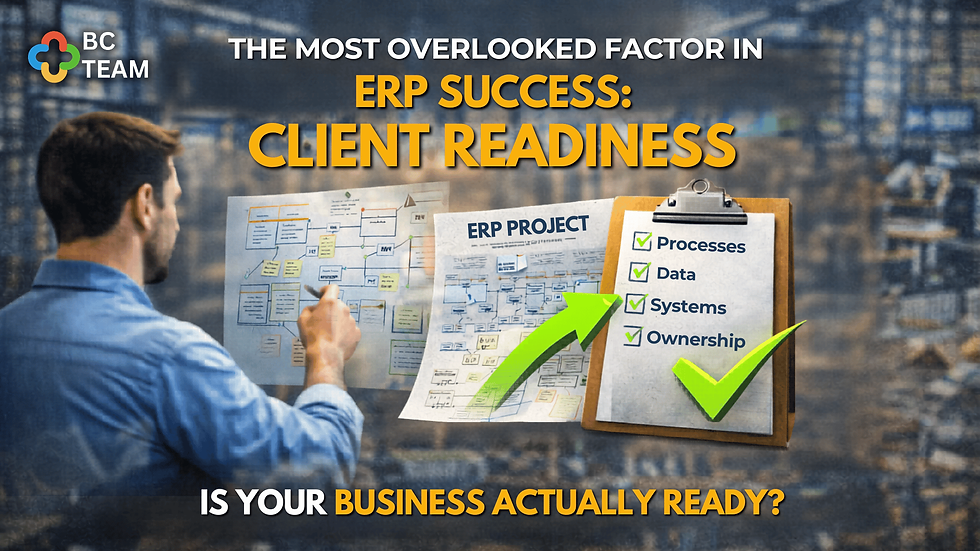
Data is at the heart of your ERP. Poor data leads to poor decisions. Before migration, clean up old records, remove duplicates, and validate master data for accuracy.
The BC Team uses structured data migration templates to ensure accuracy and consistency when transferring information from legacy systems into Business Central. Testing with a small sample first helps identify issues early and ensures a smooth transition.
4. Develop a Realistic Timeline and Budget
A well-planned project timeline balances thoroughness with momentum. Break your implementation into clear phases — setup, configuration, migration, testing, training, and go-live — with defined milestones.
Include all costs in your budget: software licenses, partner services, internal resource time, and contingency funds. Transparent communication keeps stakeholders aligned and expectations realistic throughout the project.
5. Invest in Comprehensive User Training
Technology only delivers value when people use it confidently. Provide role-based training tailored to how different teams interact with Business Central — accountants, project managers, and operations staff each need focused sessions.
The BC Team provides personalized training and documentation, ensuring your staff understands not just how to use the system, but why it matters for efficiency and profitability.

Overcoming Common Business Central Implementation Challenges
Even the best projects face obstacles. Anticipating them helps you stay proactive.
Challenge 1: Resistance to Change
Employees may hesitate to adopt new systems. Communicate early, explain the benefits, and highlight how automation makes their jobs easier.
Challenge 2: Data Quality Issues
Dirty or incomplete data leads to inaccurate reporting. Clean and validate your data before migration.
Challenge 3: Scope Creep
Stick to your initial scope. Capture additional feature requests for future phases instead of delaying go-live.
Challenge 4: Integration Complexity
Work closely with your partner to plan integrations — such as payroll, CRM, or field service systems — and test them before launch.
Maximizing ROI After Go-Live
Once Business Central is live, your journey doesn’t end — it evolves.
Continuous improvement ensures your ERP grows with your business.
Monitor performance through dashboards and KPIs.
Gather feedback from users to identify enhancement opportunities.
Refine workflows based on real usage.
Stay current with Microsoft updates and new features.
The BC Team provides post-implementation support to help you optimize performance, automate additional processes, and expand capabilities as your business scales.
Partner with The BC Team for a Seamless Implementation
Implementing Microsoft Dynamics 365 Business Central is more than a technology upgrade — it’s a strategic investment in your company’s future.
With over 18 years of ERP expertise, The BC Team helps businesses:
Build practical, phased implementation plans
Configure Business Central for industry-specific workflows
Train teams for confident system adoption
Ensure data accuracy and project transparency
Whether you’re replacing outdated systems or scaling for growth, we’ll help you implement Business Central the right way — with less risk, faster results, and long-term success.
🚀 Ready to start your Business Central implementation?
Let’s build your roadmap to efficiency, visibility, and control.
👉 Visit www.bcteam1.com to learn more or schedule a consultation.

Comments